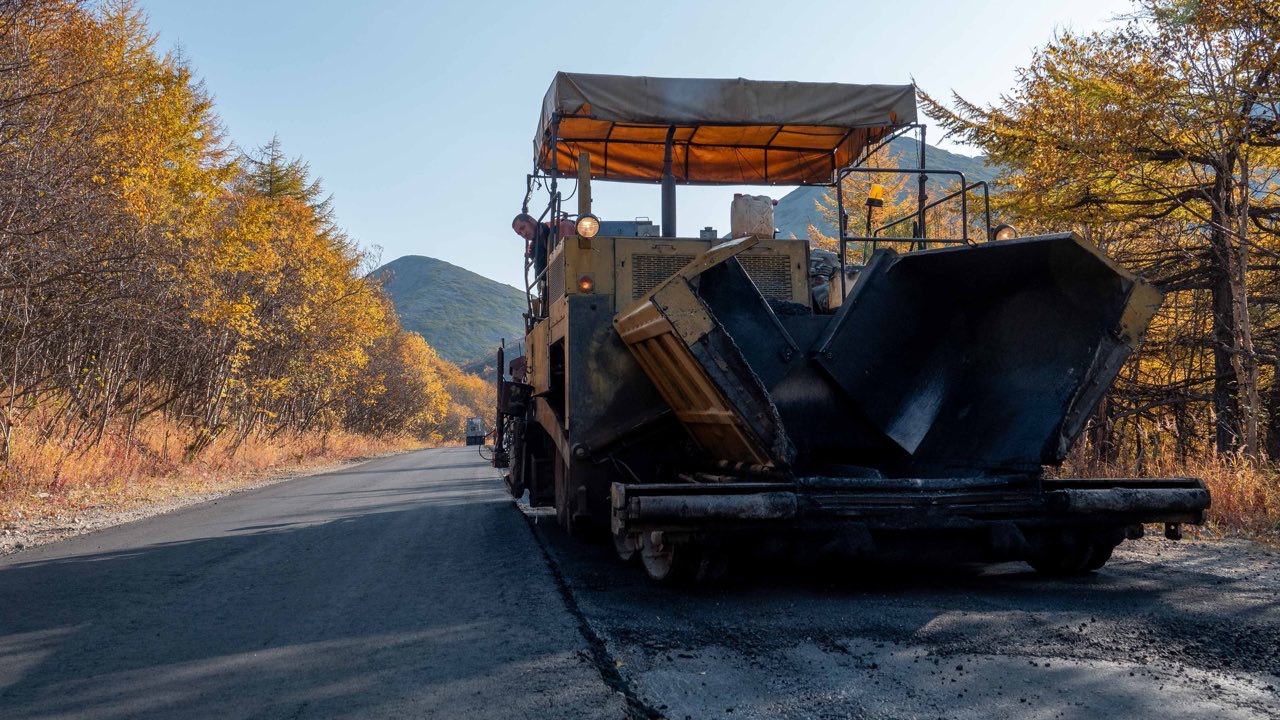
A cold planer that mills asphalt one month and concrete the next is running two fundamentally different operations, even if the machine looks the same and the operator is doing the same job. The material being cut behaves differently, wears cutting tools differently, and demands different things from the teeth doing the work. Running the wrong tooth specification in either application doesn’t just reduce performance — it costs more per unit of material removed than running the right configuration.
Understanding why the specifications differ is useful for anyone sourcing replacement teeth, specifying equipment for a project, or trying to diagnose why tooth life is shorter than expected.
What Makes Asphalt and Concrete Different to Cut
Asphalt is a composite of aggregate (crushed stone or gravel) and bitumen binder. The binder gives asphalt its flexibility and relatively low tensile strength. When a milling tooth hits asphalt, the material tends to fracture and chip away in pieces. The cutting action is more fracture-dominated than abrasion-dominated, which means the primary stresses on the tooth are impact loads rather than grinding loads.
The aggregate content still creates abrasion — the stone particles in asphalt are hard, and they wear carbide tips over time — but the binder means the material releases relatively easily. Asphalt is also typically softer at operating temperatures, which further reduces the cutting resistance.
Concrete is different in almost every relevant way. Portland cement concrete has much higher compressive strength than asphalt, and it lacks the flexible binder that allows asphalt to fracture and release. Milling concrete means cutting through a harder, more brittle matrix that resists fracture and transmits more force back into the cutting tool. The aggregate in concrete — often harder than asphalt aggregate — creates more abrasion. And the cement matrix itself is chemically more aggressive toward carbide than bitumen.
The result is that concrete milling is harder on teeth than asphalt milling by a significant margin. Operators who use the same tooth specification for both typically see dramatically shorter life when switching to concrete.
How These Differences Translate to Tooth Specifications
Carbide grade and tip geometry are the primary variables that change between applications.
For asphalt, where impact loading is the dominant stress, tooth design prioritizes impact toughness — the ability to absorb repeated blows without fracturing. The carbide grade used in asphalt teeth typically has higher cobalt content, which improves toughness at some cost to hardness. The tip geometry is often more aggressive (sharper attack angle) because asphalt fractures relatively easily and the tool can take advantage of that.
For concrete, where abrasion resistance is the bigger concern, the carbide formulation shifts toward higher hardness — lower cobalt content, finer grain structure — to resist the grinding wear from hard aggregate and cement. The tradeoff is reduced impact toughness, which is acceptable in concrete milling because the cutting forces, while high, are more uniform than the sharp impact loads in asphalt.
Tip size also tends to differ. Concrete milling teeth often have larger carbide tips to provide more wear volume — more material to lose before the tooth is spent — because the aggressive wear conditions consume carbide faster. A larger tip extends the service interval even as it increases per-tooth cost.
Brazing quality matters more in concrete than in asphalt. The joint between the carbide tip and the steel body of the tooth is under significant thermal and mechanical stress in any milling application. In concrete, the combination of higher cutting forces and more abrasive conditions creates more stress on that joint. A tooth with a poorly bonded tip in an asphalt application might last a while before the tip fails. The same tooth in concrete might lose tips quickly, which destroys the steel body faster and creates a tooth that’s useless before it’s geometrically worn.
Where Mistakes Get Made
The most common error is sourcing replacement teeth on price alone without accounting for application. A concrete milling tooth that costs more than an asphalt tooth isn’t necessarily a worse value — if it lasts three times as long in concrete applications, the per-unit cost of material removed is lower despite the higher unit price.
The second common error is assuming that because a tooth fits the holder, it’s the right tooth for the job. Dimensional compatibility and application suitability are different things. Most reputable suppliers categorize their teeth by application — asphalt, concrete, or general-purpose — and matching that to the actual job conditions is a better starting point than fit alone.
A third error is mixing tooth types on the same drum. Drums with both asphalt and concrete teeth create uneven cutting patterns because the teeth wear at different rates and have different attack geometries. The faster-wearing teeth recede, leaving the slower-wearing teeth to take disproportionate load, which defeats the purpose of using the better teeth in the first place.
What to Check When Sourcing Replacement Teeth
For any sourcing decision, a few specifications are worth confirming regardless of supplier:
The carbide grade and its specified hardness. A supplier who can’t specify this is selling on dimensional fit alone, not on application suitability.
Whether the teeth are classified for the specific application — asphalt-only, concrete-only, or dual-application. General-purpose teeth exist and are appropriate for jobs that mix both materials, but they’ll underperform application-specific teeth in dedicated conditions.
Toolholder compatibility. Road milling drums from Wirtgen, Bomag, Caterpillar, and other manufacturers use different holder geometries. Teeth that don’t seat correctly in the holder wear asymmetrically and transmit forces in ways the holder wasn’t designed to handle.
For a broader look at the available configurations and specifications across both asphalt and concrete applications, https://www.jyfmachinery.com/product/road-milling/ covers the range with dimensional and compatibility details that make it easier to identify the right match for a specific drum configuration.
The Practical Takeaway
The same cold planer doing asphalt work and concrete work is in two different operating environments, even if nothing about the machine or the operator changes. The teeth that translate machine power into material removal are what mediate between those environments, and specifying them correctly for each is where a significant fraction of the cost difference between efficient and inefficient milling operations comes from.
Tooth cost per hour is a small number. Tooth cost per ton of material milled is the number that matters, and it’s driven by whether the specification matches the application.